Saturday, March 26, 2016

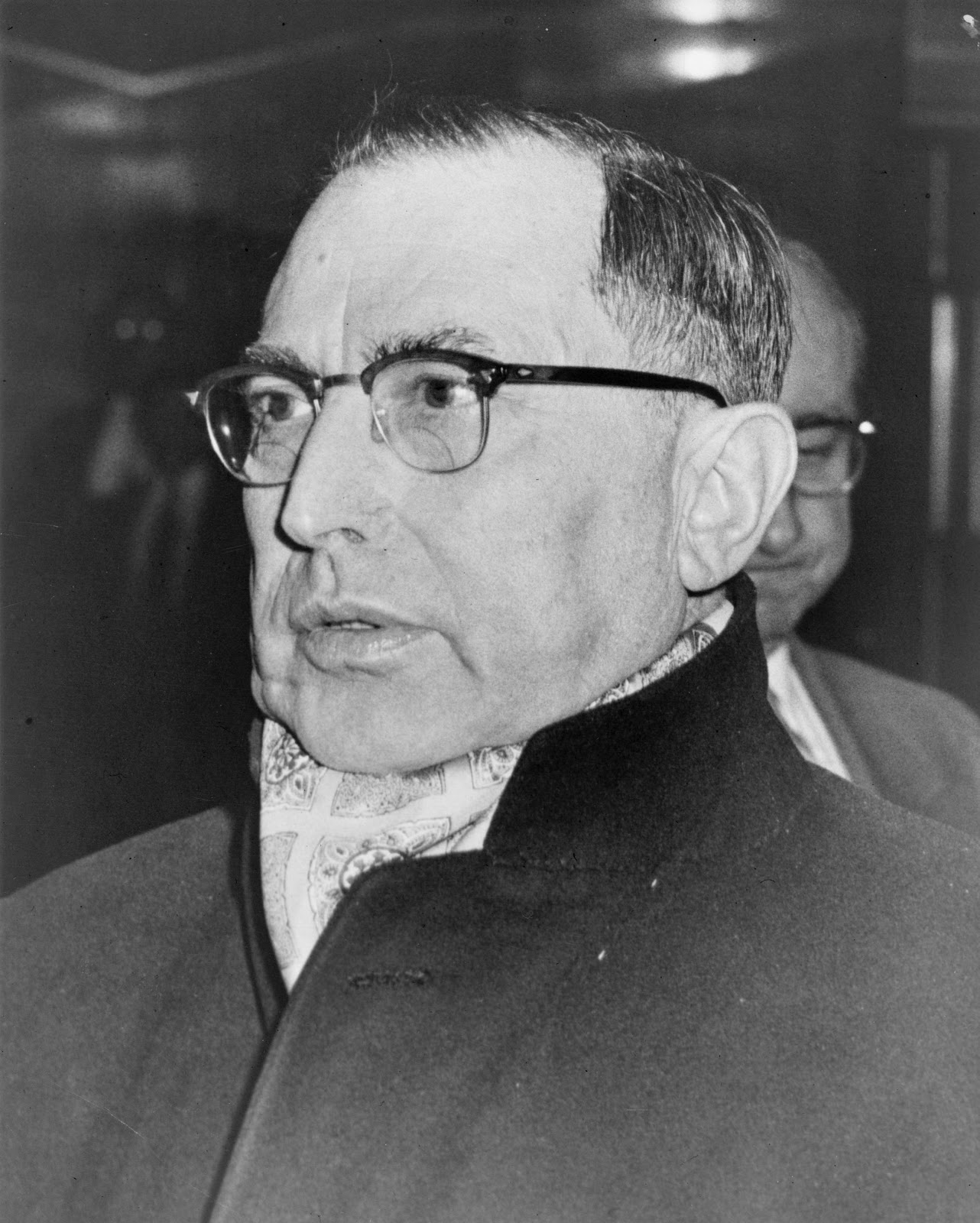
Frank "Lefty" Rosenthal - The Las Vegas Gambling Master-Mind

A Guaranteed Winning Gambler With Mafia Ties
Frank "Lefty" Rosenthal proved over-and-over again that his business sense and gambling abilities would always keep money rolling in for his bosses in the Chicago and other Italian mafia connected families.

He was the first to bring sports gambling to the casinos, he was the first to bring women dealers to the tables – he basically used his marketing genius skills to revolutionize Las Vegas into a gold mine for underworld organized crime families.

Rosenthal had control of four different hotels on the Las Vegas strip and despite who was the front-man of the operations, he was the true man behind closed doors that always ran the show.

His rise to being one of the most powerful people in Las Vegas during the 1970's was cut short after 14 years due to numerous problems.

His gangster pal Nicky "The Ant" Spilotro, who was sent out to Vegas by the mob to watch his back, was having an affair with his wife, showgirl, Geri McGee. And the fact that Spilotro was constantly in the news for illegal activities – Rosenthal association with Spilotro would haunt him throughout his Vegas career.

Rosenthal's wife had drug and alcohol problems that constantly interfered with his ability to stay completely focused on casino operations. They also had problems staying faithful to each other and had problems raising their one and only child because Rosenthal could not trust that his wife would take care of the child in a sober civil manner when he was not around.

Also plaguing his ability to run the casinos and hotels the way he wanted to was the Las Vegas Gaming Commission. They were always on his back about not having a gaming license, even though Rosenthal claimed his responsibilities at the casinos and hotels were so low on the totem pole that they did not require him to have a license – the Gaming Commission knew different and was dead set on having him removed from Las Vegas.

The whole reason Rosenthal was sent out to Vegas was because he was so good at every aspect of gambling he could easily double the profits of the Casinos, in turn, leaving more money on the table for the Mafia to profit from. The Mafia was skimming money off the top of profits of casinos that they controlled, illegally, but as long as Rosenthal was in control, the profits would stay large and the skim would easily go unnoticed.

In A Place Like Las Vegas, You Can't Stay At The Top Forever
Rosenthal really wanted to get his Gambling License so he could run the casinos and hotels legally as an acting boss. But due to his mafia connections and illegal gambling past the board wanted no part of letting him have any such power in Vegas. In an attempt to fight back against the commission that would not give him a fair hearing in a court of law, Rosenthal created his own T.V. talk show to expose the corruption and bias he was facing.

Rosenthal's show invited celebrities like O.J. Simpson, Wayne Newton, Frank Sinatra and many others on the set. But secretly he was looking to use the talk show to fire back against the Gaming Commission for strong-arming him on his Gaming License. The talk show also gave him a job title within the casino that did not require him to obtain any casino licensing - two birds with one stone - plenty of marketing for his hotels and casinos and lots of bad mouthing the Gaming Commission and calling them out for unfair use of their power.

But the Talk show brought on a lot of bad publicity and the Mafia was not happy with this exposure that Rosenthal was creating. The bosses back home asked Rosenthal many times to knock the antics off for it was bringing too much-unneeded attention to the very thing they were trying to protect, "The Skim".

Not only was the Mafia getting fed up with his antics, so was law enforcement. With the now exposed "casino-skim", the Mafia connections and the robbing, stealing, corruption and loan sharking that was ripping apart the city, courtesy of the "The Whole in the Wall Gang" and Tony "The Ant" Spilotro, the FBI stepped in to take down the whole Mafia empire that turned into a mess. After 14 years of being on top, Rosenthal would finally be muscled out of what he once called paradise, Las Vegas.

On the evening of Oct. 4, 1982, Lefty Rosenthal, the talented mob-connected professional gambler, walked out of Tony Roma’s restaurant on East Sahara Avenue to his Cadillac. His car was bugged with a bomb, and when Rosenthal started the vehicle the bomb exploded with him in it. Although he survived, the message was sent, get out-of-town.

"Lefty", retired to Miami where he continued his career as a gambler. No one was ever prosecuted on the bombing, but it's widely speculated who was behind it, The Mafia.
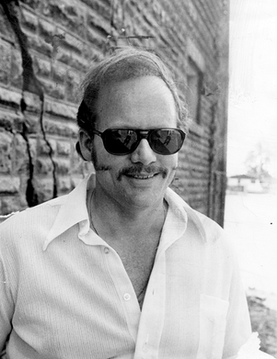
"Lefty" died on October 13, 2008, at the age of 79. 


As for the Mafia's skim and the power they had in Las Vegas


By 1980, law enforcement would have them pretty much ran out of town. Although in a place like Las Vegas, there will always be some illegal activity, but the pull that the Mafia used to have in Vegas has now dwindled down to nothing. Pimps, small-time drug peddlers and college card counters probably have more pull.

"Lefty" was a legend and will always be remembered for his ability to pick the winners in any sport. He knew how to run a successful casino/hotel operation like a scientist - he loved showgirls and topless dancers, and his deep Mafia ties made him extremely powerful and dangerous.

Sunday, October 5, 2014

Danny Greene: The Irish Mobster

Unlike most mobsters, Danny Greene did not start out in organized crime. In fact, he started out as a longshoremen working on the docks of Cleveland's lucrative transport/export industry. He earned a repetition of a tough guy who had no problem with roughing up some people for whatever the reason.

After a lot of hard work and gained respect from his work ethic and attitude - Greene became a union organizer and eventually when the union boss job title was available - he was a shoe in.

After becoming the union boss, he gained great respect from people in higher societies including government officials, rich business owners and also interested mobsters.


But it was the time that he spent with corrupt mobsters that influenced him the most. Greene liked the money that he saw and decided to take some plays out of the mobs playbook. He starting renovating the whole union office. The only problem was a lot of the money he was receiving for renovation and other projects were going right into his own pocket. Even when the renovation were over he kept receiving money for them and kept stuffing the money right into his pockets. He also ran many other rackets on the docks that were illegal with no real worry of being caught or brought up on charges - it was said he was so confident he never even really tried to hide it.
.

He gained so much confidence because of something he called the grievance comity. A bunch of tough roughneck deckhand workers that would visit you if you had a problem with the way Greene was running things. These were not people you wanted to see unless you wanted to take a beating until you decided your problem was solved.

Eventually, this activity would earn him an investigation. With the way he carelessly embezzled his money, it was not that hard to indict Greene and convict him of the crimes. But Greene received nothing more than a slap on the wrist. A $10,000 fine and a loss of his job would be the only penalties he would receive for his corruption.

After that, it was not hard for Greene to find work. One of the most powerful mobster in Cleveland, Alex "Shondor" Birns, approached him and asked him to be his muscle. Greene already liking what he had seen from the mob so far, agreed. After a while of doing work for the mob - Birns approached Greene and asked him to do his first murder. Greene agreed and suggested to use a bomb. A bomb would take care of the evidence and would surely get the job done. Birns liked the idea and okayed Greene to move forward.

The only problem was Greene botched the bombing and nearly blew himself up by accidentally letting the bomb blow up in his car. When questioned by authorities, he said someone just came by and threw a bomb in the window of his parked car - he shrugged it off and told authorities, he survived because "It's the luck of the Irish".

After the botched attempt, there was still more work for Greene, including using his muscle to influence the Cleveland garbage system in the mobs favor. But there was one job that Greene was asked to do that would change his relationship with the mob forever.

He was asked to work with a partner that Birns had set up for him - Greene obliged. The only problem was the partner turned out to be a drug dealer. Birns fronted over $70,000.00 dollars for a job, but the drug dealer spent the money on cocaine to double the profit of the job. Unfortunately, cops would raid the apartment of the drug dealer and the partner ended up dumping the coke and losing Birns' money and the profit.


This issue put Greene in a sticky situation. Birns wanted Greene to pay back the $70,000.00 since the partner and the money was unreachable. Greene reluctantly refused because he believed since the drug dealer was Brims' guy, it should be Brims' loss. In the underworld - a situation like this only ends in one or two ways - someone pays or someone dies.

Birns put a $25,000.00 hit on Greene's head and gave the contract to whoever wanted to take it.

This would ignite a war between the mob and Greene and his group of Irish pals he put together called the Celtic Club. The club was mainly made up of Irish gangsters standing their ground and standing proud for their Irish heritage. Greene would have several attempts made on his life which he survived - always saying "It's the luck of the Irish".

A bloody war would erupt between the two groups; bombs were frequently used for a means of murder. But one of the most important bombs took place in 1975, right outside of Birns' favorite bar and across the street from a church. After finishing a drink, Birns walked to his car and started it up - Birns' car blew up in the streets of Cleveland on the eve of Easter. One of Cleveland's biggest mob/underworld figures was dead.

This only promoted the war between the mob and Greene - more bombs and more murders ensued. Everyone wanted Greene to tell his crew to stand-down, even his investigating detective asked him to stand-down for his own safety because the mob was known for never backing down and he was sure to find himself blown up as well. But Greene had no interest, he said he would never back down to the mob and said he was hell-bent on running the mob out of Cleveland.

After more bloodshed and the bombing and murder of Greene's number two-man,  Greene was still not deterred. Greene often stood out in the open perhaps taunting his enemies. He never really laid low and even was brought up on manslaughter charges after being shot at and returning fire killing the would-be assassin - charges were later dropped. His place where he lived was blown up while he was in it - again he escaped using the old saying "it's the luck of the Irish".


But the luck would run out. As Greene walked to his car October 6, 1977, in Lyndhurst, Ohio, a bomb was set off and the green light on Greene's head was finally over (the Irishman was dead.)


In the wake of Greene's death, his wish final came true. He went to war to get the mob out of Cleveland so he could have the turf; he may have never got the Cleveland turf, but for the most part neither did the mob. Thanks to the apprehension and corporation of an out-of-town mobster, Ray Ferritto, who placed the bomb in Greene's car and set it off - because of his testimony, roughly 22 Cleveland organized crime figures were convicted and sent to prison. Since then Cleveland has been a much quieter place.


Friday, April 25, 2014

The Real Sopranos vs. T.V. Sopranos (DeCavalcante Family)


The real New Jersey Mob is the DeCavalcante family, but what we see on t.v., about the luxurious, prestigious life of crime promoted by well connected people (as seen on T.V. by The Sopranos) is often embellished.

In the case of this "Real Sopranos" documentary, it shows some of the funny but sometimes sad similarities between the real life New Jersey Mob and the HBO hit series "The Sopranos" that we all came to know and love.

  • A boss dieing of Stomach Cancer -- like in the first season
  • A high ranking mafia member killed for being homosexual -- like Vito
  • Fighting for New York's approval -- always
  • Running a strip club for legitimate income -- like Tony Soprano 
  • Robbing the World Trade Center and getting caught -- not a well thought out plan
  • How fast your so called family will turn and rat
  • How fast your family will expect you of ratting

    Sunday, March 9, 2014

    The Commission: The Mafia's Original Seven

    The head of the Mafia Families and which families they spoke for.


    Charles "Lucky" Luciano
    Philadelphia
    Cleveland
    Pittsburgh


    Joseph "Bannanas" Bananno
    Bananno Family
    Colorado
    Dallas


    Gaetano "Tommy" Gagliano
    Soon to be the Luchesse Family
    New Orleans


    Vincent Mangano
    Soon to become The Gambino
    New Jersey
    New England


    Guiseppe "Joe" Profaci
    Soon to become the Colombo Family
    Tampa


    Stafano Maggadino
    Buffalo


    Al "Scareface" Capone
    Chicago Outfit
    Los Angeles
    San Jose
    San Francisco
    Milwaukee 


    Tuesday, February 11, 2014

    Italian Mafia Drug Raid: 24 Arrested in U.S. and Italy

    A major Trans-Atlantic Italian Mafia drug smuggling operation was raided early Tuesday morning. The raid targeted both New York members and Italy members. Right after mid-night on Monday or (Tues morning) undercover agents raided locations in Brooklyn, while undercover agents across the ocean raided locations in Italy.

    In all, 24 men were arrested, some were even said to be the head of the powerful U.S. Mafia Family, the Gambinos.

    The Calabria based 'Ndrangheta Mafia which is much like the Sicilian Mafia, the Cosa Nostra, has been bridging an alliance in America with U.S. mafias to traffic drugs and guns into the U.S.using such avenues like South America.

    The undercover operation used wire taps, computer e-mails, and undercover agents to infiltrate the mafia group that were using fruit companies as a cover to smuggle drugs into Italy and back out to America.


    In the process of the undercover operation coded "Operation New Bridge" they were tracking plans that the 'Ndrangheta mafia had to smuggle in 500kg of cocaine from Guyana to Italy to be cut distributed to different customers including ones in the U.S.


    The value of the 500kg or 1000 pounds would of had an estimated street value, after being cut, of about $1 billion.

    U.S. attorney Marshall Miller said, "The raid struck at the heart of the Italian Mafia Crime Syndicate."


    Tuesday, January 28, 2014

    Philly Mob Boss (Joseph "Uncle Joe" Ligambi) Acquitted

    Uncle Joe, the reputed Philadelphia mob boss, beat the rap for a second time Friday at his retrial on gambling and racketeering charges that stem from a long-time FBI investigation.

    A jury acquitted 74-year -old Joseph "Uncle Joe" Ligambi of witness tampering, but deadlocked on three other charges. It's not clear if prosecutors will try him a third time on the 2009 indictments.

    Mob turncoats and other government witnesses painted Ligambi as the head of a fading La Cosa Nostra crime family in Philadelphia. The FBI has been investigating him for more than a decade, since he allegedly took over when Joseph "Skinny Joey" Merlino went to prison.


    The Ligambi case largely involves the collection of small gambling debts and loans, and the operation of video poker machines at neighborhood bars.

    The retrial was a pared-down version of last year's trial, when Ligambi's reputed underboss, enforcer and several associates were convicted. Underboss Joseph "Mousie" Massimino ended up with a 15-year-sentence, while the enforcer got 11 years.

    That jury acquitted Ligambi of five counts, while deadlocking on four.
    "Now we've won a sixth of nine counts," defense lawyer Ed Jacobs told reporters after Friday's verdict. "Both times the jury was unable or unwilling to accept the government's theories on racketeering conspiracy and gambling."

    He's called the case a witch hunt, and pointed out the lack of bloodshed. However, prosecutors pointed to the alleged threats and tough talk heard on FBI tapes to argue that the group remains dangerous.

    The jury on Friday also acquitted Ligambi's nephew, 50-year-old George Borgesi, of racketeering conspiracy. He was being released after 13 years in prison from an earlier mob case.
    Both juries deliberated for several weeks.

    Thursday, January 23, 2014

    The "Lufthansa Heist": Five Mobsters Indicted in the 30 Year Old Crime


    "Vincent Asaro" Originally the first person to be arrested in the Heist
    Vincent Asaro, a high-ranking capo in the Bonnano Crime Family, his son Jerome Asaro, Jack Bonventre, Thomas "Tommy D" Fiore and John "Bazoo" Ragano were all indicted on Thursday in a Federal New York Court.

    Charges that make the big news is the link to the 1978 "Lufthansa Hiest".

    Famed in the movie "The Goodfellas", the heist was the biggest heist in US history, said to bring in around 6 million dollars or 20 million in todays money.

    Jimmy Burke, (played by Robert DeNiro in the Goodfellas) the mastermind behind the heist, was convicted on a parole violation in 1982 and while in prison he was convicted on a murder charge of a drug dealer and sentenced to a much longer term that keep him in prison till 1996 when he died of lung cancer.

    FBI descended on Burke's properties in June in New York, including his home where the expected planning of the heist took place and the "Robert's Lounge" that he owned and operated and was said to use it as his own personal cemetery.

    The excavating of his Lounge brought up remains of human bones identified as Paul Katz (Burke's associate) and other evidence that gave FBI enough for arrests and indictments of the above mentioned five mobsters. Charges included: racketeering linked to the heist, extortion, consparicy, and murder for the high-ranking Vincent Asaro in connection to Katz's murder.


    It will be interesting to see how these charges stick, stature of limitation should already long be over with, outside of the murder charge.

    In any event, the crime was more then 30 years ago, the money is gone, the mastermind is dead and the mastermind pretty much murdered all other people involved. Should the FBI really be wasting time on criminal charges linked to this heist?

    Murder charges I can see, but giving these old geezers a tax paying free retirement home may not be good money spent by the FBI and the judicial system.


    Thursday, November 21, 2013

    James "Whitey" Bulger Attorneys' File for Appeal


    After last weeks sentence came down of two life sentences + five years, Whitey Bulger was shuffled off to jail, but he would not go silently. Even though he stuck with the crime code of silence through out his trail and even at his sentencing, his attorneys did the talking for him.

    Late Wednesday a one sentence appeal was filed in court, stating that it was against the law to imprison Bulger for he was acting as an informant for a federal-prosecutor who granted him immunity, and was okayed by the prosecutor to commit the crimes that he was going to spend the rest of his life in prison for.

    Bulger calls the trial a sham, and his attorneys are saying that it is unfair they were unable to use the testimony of the federal prosecutor that supposedly gave him the ok to commit these crimes, due the fact that he was dead.

    From most accounts it sounds like the appeal will probably go over like a led balloon. Whitey's handlers were corrupt federal agents taking bribes from him, so even if they were to testify it probably would not hold a lot of weight.


    Thursday, November 14, 2013

    James "Whitey" Bulger Sentenced

    Like with most Crime Bosses of this century, James "Whitey" Bulger found himself looking at an indictment that would threaten life in prison.


    And on Thursday, Nov. 14, 2013, Judge Denise Casper, took the pleasure of putting the crime boss away with a sentence of two consecutive life terms plus five years. Before the Judge handed down the sentence she expressed her displeasure, "The testimony of human suffering that you and your associates inflicted on others was at times agonizing to hear and painful to watch,"

    The two life sentences came from an indictment of racketeering that included murder, extortion, money-laundering and weapons charges. Of 19 slayings the prosecution was accusing Whitey of, the jury found him guilty of 11. 

    On Wednesday, the court got to hear from a dozen people with victim impact statements. Most were people that were directly affected by his criminal activities including family of slaying victims -- calling him a punk, a terrorist, a sociopath and even Satan. 

    Whitey was a rare crime boss. He ran a criminal organization, but unlike most bosses he was hands on. He ordered and joined in on criminal activity on a regular basis including murder. Although Whitey thought of himself as a modern day Robbin Hood, his criminal activity effected all walks of life even the innocent. 

    Much of the public never thought the FBI would ever catch up to the 84 year old, especially after making it on the lamb for 16 years before he was finally picked up. Just under Osama Bin Laden, Whitey spent many years on the FBI top ten most wanted list. In 2001, FBI found him in a Santa Monica, Cal. hideaway with his girlfriend.

    Possibly what kept Whitey's rain of terror lasting for so long is his corrupt FBI handler, Former Boston FBI agent John Connolly Jr. So long as Whitey was informing on the New England mob, Whitey's rivals, Connolly Jr. would tip off Whitey anytime there was trouble coming his way to help him stay one step in front of the law and his rivals.  

    There is still a lot of money missing that the authorities probably will never find. A gangster like Whitey, who after hearing all of the evidence against him still maintained his innocent and called the whole trail a shame, someone so true to his roots will die with his money.    


    Tuesday, November 12, 2013

    John Gotti Jr. in the News in this day-and-age?

    Gotti Jr. Stabbed

    Gotti was leaving a CVS in his home town of Syosset, New York, when he was stabbed in the abdominal area. Supposedly he was breaking up a fight between two individuals that he did not know when the stabbing occurred. Gotti was taken to the hospital were he was treated and let go, and is now expected to make a full recovery.

    Obviously, any Gotti story is going to make the news, but this one has a little more behind it, say authorities. When Gotti was question about the stabbing, in true mob fashion he refused to talk. Lead detective of the case says that anyone that was stabbed would give up any information they could to bring their attacker to justice.

    The Nassau Police Department has joined the investigation, but have no comment on what they are investigating at the time. One can only speculate that they are probably trying to find out if there was an attempted hit on his life for leaving the mob, or maybe he is still in the mob and this was a case of mob violence.

    John Gotti Jr. was tried four different times on racketeering charges, all of which ended with a hung jury. His silence could be nothing more than not wanting to bring back any passed life problems, or not wanting to give any other reasons for the FBI to open his cases back up again.


    Thursday, October 17, 2013

    Detroit Gangsters: Kilpatrick and Ferguson

    Kwame Kilpatrick

    He received a 28 year sentence on charges that range from extrotion, racketeering, attempted extortion, bribery, mail fraud, wire fraud, rigging contract bids and filing false tax returns. Of 30 charges brought upon Kilpatrick 24 of them stuck. It is said that Kilpatrick was living well beyond his means and was lining his pockets and his friends and families pockets with millions while the city hobbled along in poverty. Kilpatrick's lawyer has argued for the justice system to hear the case again - a plea that was denied. Needless to say the city of Detroit is happy to know that this wanna be Tony Soprano will be locked up for a long time.


    Bobby Ferguson

    Ferguson received 22 years in prison for his role in Detroit corruption - charges were much the same as Kilpatrick's charges. Ferguson, a contractor, is said to have ran many small businesses out of business due to his corruption and bid rigging tactics. With the help of Kilpatick, he is said to have unjustly landed somewhere around 73 million dollars in contracts. Ferguson's lawyers also tried to have his case heard again claiming most of the testimony was hear say - but like with Kilpatrick, his case was also denied. Ferguson spoke at his sentencing, but his strong silent mobster image he portrayed was lost. He spoke for ten minutes, mostly rambling and even reading scripture out of his bible he clutched in his hands. Wanna be #2 Tony Soprano will be spending his next 22 years in federal prison. 


    Bernard Kilpatrick

    B. Kilpatrick, Kwamye's dad,  will be sentenced today for lying on his taxes. At the age of 73 his defense claims he should only receive 15 to 21 months in prison, but prosecution are seeking 27 to 33 months, his defense says the prosecution is trying to tack on to his sentence due to his sons crimes.     


    Unfortunately, Both K. Kilpatrick and B. Ferguson is being asked to pay back retution money, but no one knows where this money will come from - by most accounts the city of Detroit can probably forget about seeing any of that money. 


    Tuesday, October 8, 2013

    The Canadian Mafia Boss -- Vito Rizzuto -- Back On Top

    Vito Rizzuto is once again considered the Don of Montreal, 13 months after he was released from a U.S. prison.

     After spending six years in Prison and having many people doubt that he would every be a force in the Canadian underworld again - police investigation specialist Richard Dupuis says thanks Rizzuto's associates standing by his side the whole six years he is now back on top.

    "The Sicilians who were part of his family did not leave the underworld, but we can say they did stay out of trouble during Rizzuto's incarceration," and goes on to say, "this is not the case anymore."

    Since Rizzuto's arrest in 2004, his lifestyle looks to prove he has gained much of his underworld influences back and he is once again enjoying the power of being a mob boss.

    Upon his release, Rizzuto was mostly laying low and bought a $100,000 armored car after his return to Montreal from the Colorado prison system in 2012.

    But now he is back in the public eye, showing no fear for his safety and largely receiving the respect that a feared and powerful Don would receive.

    Montreal's La Presse newspaper reports that Rizzuto was seen many different times in Canada's Little Italy, smiling and laughing - shaking hands with old friends. He has also been seen playing golf in the early morning, again with little to no security.

    In 2010, Rizzuto's father was murdered by a sniper (alleged) by his enemies, shortly after on the morning of  his funeral a box was placed on the steps of the church where the services were held - no word what was in it. The box was said to be sent from Woodbridge, Ont., this is where his alleged family (Calabrian) rivals are based.

    But, so far there is no more evidence that the power that Rizzuto or his family (Calabrian) has is being contested by anyone from Ont. or anywhere else in Canada - leaving most authorities to believe his power now reaches to and beyond Ont.

    Thursday, September 26, 2013

    Cleveland Mafia: Blood for Corn Sugar

     How the Cleveland Mob Started

    During the late eighteen hundreds, the four Lonardo brothers and seven Porrello brothers were boyhood friends and fellow sulphur mine workers in their hometown of Licata, Sicily. They came to America in the early nineteen hundreds and eventually settled in Cleveland.


    "Big Joe" Lonardo

    “Big Joe" Lonardo became a successful businessman and community leader. During Prohibition, he became wealthy as a dealer in corn sugar which was used by bootleggers to make corn liquor. He was respected and feared as a "padrone" or godfather. "Big Joe" became the leader of a powerful and vicious gang and was known as a corn sugar "baron." Joe Porrello was one of his corporals.


    Prohition

    With the advent of Prohibition, Cleveland, like other big cities, experienced a wave of bootleg-related murders. The murders produced the same suspects, but no indictments. These suspects were members of the Lonardo gang. Several of the murders occurred at the corner of E. 25th and Woodland Ave. This intersection became known as the "bloody corner." Many of Lonardo’s gang members had previous street battle experience in the newspaper circulation wars.


    Around 1926, Joe Porrello left the employ of the Lonardos to start his own sugar wholesaling business. Porrello and his six brothers pooled their money and eventually became successful corn sugar dealers headquartered in the upper Woodland Avenue area around E. 110th Street.

    With small competitors, sugar dealers and bootleggers, mysteriously dying violent deaths, the Lonardos' business flourished as they gained a near monopoly on the corn sugar business. Their main competitors were their old friends the Porrellos.

     "Big Joe" Lonardo in 1926, now at the height of his wealth and power, left for Sicily to visit his mother and relatives. He left his closest brother and business partner John in charge. During "Big Joe's" six-month absence, he lost much of his $5,000 a week profits to the Porrellos who took advantage of John Lonardo's lack of business skills and the assistance of a disgruntled Lonardo employee. "Big Joe" returned and business talks between the Porrellos and Lonardos began. They "urged" the Porrellos to return their lost clientele.


    The WARS Begin    

    On Oct. 13th, 1927 "Big Joe" and John Lonardo went to the Porrello barbershop to play cards and talk business with Angelo Porrello as they had been doing for the past week. As the Lonardos entered the rear room of the shop, two gunmen opened fire. Angelo Porrello ducked under a table.

    The Porrello brothers were arrested. Angelo was charged with the Lonardo brothers' murders. The charges were later dropped for lack of evidence. Joe Porrello succeeded the Lonardos as corn sugar "baron" and later appointed himself "capo" of the Cleveland Mafia.


    A Mafia Meeting

    On Dec. 5th, 1928, Joe Porrello and his lieutenant and bodyguard Sam Tilocco hosted the first known major meeting of the Mafia at Cleveland's Hotel Statler. Many major Mafia leaders from Chicago to New York to Florida were invited. The meeting was raided before it actually began.

    Joe Profaci, leader of a Brooklyn, N.Y. Mafia family was the most well-known of the gangsters arrested. He was the founder of the Colombo Mafia family. Vincent Mangano also ranked high as founder of the Gambino family most recently headed by the "Dapper Don" John Gotti. Within a few hours, to the astonishment of police and court officials, Joe Porrello gathered thirty family members and friends who put up their houses as collateral for the gangsters' bonds. Profaci was bailed out personally by Porrello. A great controversy over the validity of the bonds followed.

    As Joe Porrello's power and wealth grew, heirs and close associates to the Lonardo brothers grew hot for revenge.


     More War

    Angelo Lonardo, "Big Joe's" 18-year-old son along with his mother and his cousin, drove to the corner of E. 110th and Woodland, the Porrello stronghold. There Angelo sent word that his mother wanted to speak to Salvatore "Black Sam" Todaro. Todaro, now a Porrello lieutenant, had worked for Angelo's father and was believed to be responsible for his murder. In later years it was believed that he was actually one of the gunmen.

    As Todaro approached to speak with Mrs. Lonardo whom he respected, Angelo pulled out a gun and emptied it into "Black Sam's stocky frame. Todaro crumpled to the sidewalk and died.

    Eventually Angelo and his cousin were arrested and charged with "Black Sam's" murder. For the first time in Cleveland's bootleg murder history justice was served as both young men were convicted and sentenced to life. Justice although served would be shortlived as they would be released only a year and a half later after winning a new trial.

    By 1929, Little Italy crime boss Frank Milano had risen to power as leader of his own gang, "The Mayfield Road Mob." Milano's group was made up in part of remnants of the Lonardo gang and was also associated with the powerful "Cleveland Syndicate," headed by Moe Dalitz, associate of mega-mobster Meyer Lansky. The Cleveland Syndicate was responsible for most of the Canadian booze imported via Lake Erie. In later years they got into the casino business. One of the their largest and most profitable enterprises was construction of the Desert Inn Hotel/Casino in Las Vegas. Dalitz would become known in legitimate circles as the "Godfather of Las Vegas."

    By 1930, Frank Milano and his brother Tony had grown quite powerful. Frank had gone so far as to demand a piece of the lucrative Porrello corn sugar business. On July 5th, 1930, Porrello received a phone call from Milano who had requested a conference at his Venetian Restaurant on Mayfield Road and Murray Hill Roads in Little Italy.

    The meeting unexpectedly erupted in gunfire and both Porrello and his bodyguard were killed. Frank Milano and several of his restaurant employees were arrested but only charged with being suspicious persons. The gunmen were never actually identified.

     Cleveland's underworld was tense with rumors of imminent warfare. Porrello brother Vincente-James spoke openly of wiping out everyone responsible for his brother's murder. Three weeks after his brother's murder, Jim Porrello still wore a black shirt as he entered the I & A grocery and meat market at E. 110th Street and Woodland. As he picked out lamb chops at the meat counter, a Ford touring car, its' curtains tightly drawn, cruised slowly past the store. A couple of shotguns poked out and two thunderous blasts of buckshot were fired, one through the front window of the store and one through the front screen door.

    The amateur gunmen got lucky. Two pellets found the back of Porrello's head and entered his brain. He was rushed to the hospital but died a few hours later.

    Two local petty gangsters were arrested and charged with murder. One was discharged by directed verdict and the other was acquitted. Like almost all of Cleveland's bootleg related murders, the killers never saw justice.

    About this time, it was rumored that the Porrello brothers were marked for extermination. The surviving brothers went into hiding. Raymond, known for his cocky attitude and hot temper spoke like his brother James did of seeking revenge. Raymond was smarter though, he took active measures to protect himself.

    On August 15th, 1930, three weeks after James Porrello's murder, Raymond Porrello's house was leveled in a violent explosion. He was not home at the time since he had taken his family and abandoned his home in anticipation of the attack. The bombing was a warning to the Porrellos from the Mayfield Road Mob. Soon, the out-gunned Porrellos were closing down their sugar operation.

    The thirst for revenge had not been satisfied for members of the Lonardo family. It was generally believed that "Black Sam" Todaro instigated and perhaps took part in the murders of "Big Joe" and John Lonardo. However it was believed by members of the Lonardo family that the remaining Porrello brothers, particularly the volatile John and Raymond and eldest brother Rosario still posed a threat because of the murders of Joe and James Porrello.


     The Deadliest of Shootings

    On Feb. 25th, 1932 Raymond Porrello, his brother Rosario and their bodyguard Dominic Gulino (known also by several aliases) were playing cards near E. 110th and Woodland Avenue. The front door burst open and in a hail of bullets the Porrello brothers, their bodyguard and a bystander went down. The Porrellos died at the scene. Gulino died a couple of hours later. The bystander eventually recovered from his wounds. This shooting was Cleveland's deadliest mob hit ever.


    Legal Alcohol Changes the Game

    In 1933, Prohibition was repealed. The bootleg murders mostly stopped as organized crime moved into gambling and other enterprises. Frank Milano moved to Mexico leaving “Big Al” Polizzi in charge. Angelo Lonardo continued his crime career as a respected member of the Cleveland family eventually rising through the ranks to run the northeast Ohio rackets in 1980. Things were remained relatively quiet in the Cleveland underworld through the forties, fifties and sixties.


    Enter Danny Greene

    Enter Danny Greene. He was fearless and cunning - loved by his neighbors and hated by his business competitors - the members of the Cleveland Mafia. Fiercely proud of his Irish heritage, he was a Celtic warrior at heart, obsessed with the color green - green car, green jackets, green ink pens. For a decade Greene had been boldly encroaching on mob territory. Their threats didn't worry him.

    Danny got his start in racketeering in the late sixties as president of the local International Association of Longshoremen. After a shocking expose by the Cleveland Plain Dealer, he was ousted from the docks and fined $10,000 for embezzling union funds.

    Later Danny worked for as an enforcer for local mobsters including Alex "Shondor" Birns, well-known Jewish racketeer. After a dispute over a $60,000 Greene refused to repay, Birns had a bomb planted in his car. It was the first in a series of botched attempts on the brash Irishman's life. Danny found the bomb.

     "Luck of the Irish," he would often say. "I'll return this to the old bastard who sent it to me," Greene promised.

    Sure enough, a few weeks later Birns was blown out the roof of his car, in two pieces. It was an excellent hit and Danny was proud.

    A power vacuum developed in the Cleveland underworld when John Scalish, mob boss from 1944 until 1976 died during heart surgery. Danny Greene teamed up with Teamster official John Nardi in a bid to take over. Their biggest offensive and mistake was the 1976 murder of Leo "Lips" Moceri, the respected and feared new underboss of the Cleveland Mafia, and the bombing of enforcer Eugene “The Animal” Ciasullo. Aging mob boss James Licavoli ordered his henchman to "get rid of the Irishman," but the inexperienced soldiers had no luck. The attempts by the self-proclaimed tough guys were almost comical. Then west coast wise guy Jimmy 'the Weasel" Fratianno recommended a hired killer from Erie.


    Danny Greene is Dead

    In the end, Danny went out the way he predicted. "When you live by the bomb, you die by the bomb." The Irishman was dead.

    But the Mafia's celebration was cut short. There was much sloppy work, a few observant witnesses (one of whom was a sketch artist!) and extraordinary investigations by federal, state and local officials. The aftermath of Greene's assassination brought about a Mafia war in Youngstown, Ohio, a mob murder plot against Cleveland Mayor Dennis Kucinich and charges against Mahoning County Sheriff James Traficant for accepting Mafia bribe money. Traficant was acquitted and is now a United States Congressman.

    In 1983, Angelo Lonardo, 72, one-time Cleveland Mafia boss, turned government informant. He shocked family, friends, law enforcement officers and particularly, criminal associates with his decision which was made after being sentenced to life plus 103 years for drug and racketeering convictions. The sentence came after the monumental investigation into the murder of Danny Greene. As a direct result of Danny's murder, Jimmy "Weasel" Fratianno also defected and co-authored The Last Mafioso and Vengeance is Mine. His courtroom testimony and that of Angelo Lonardo, once called "the highest ranking mobster ever to testify for the government" helped put away mob bosses Anthony "Fat Tony" Salerno of New York's Genovese Mafia family, Anthony "Tony Ducks" Corallo of the Luchesse clan and Carmine Persico of the Colombo family. He also testified in 1985 at the Las Vegas casino "skimming" trials in Kansas City. Federal investigators trace these major mob convictions right back to the murder of Greene. Danny would have been proud.

    Currently, remnants of the once-mighty Cleveland Mob are thought by many to be under the control of Joseph “Joe Loose” Iacobacci.

    By Rick Porrello
    Web Host, Author, Policeman

      http://americanmafia.com/Cities/Cleveland.html